
Introducing LLM Ops Kit
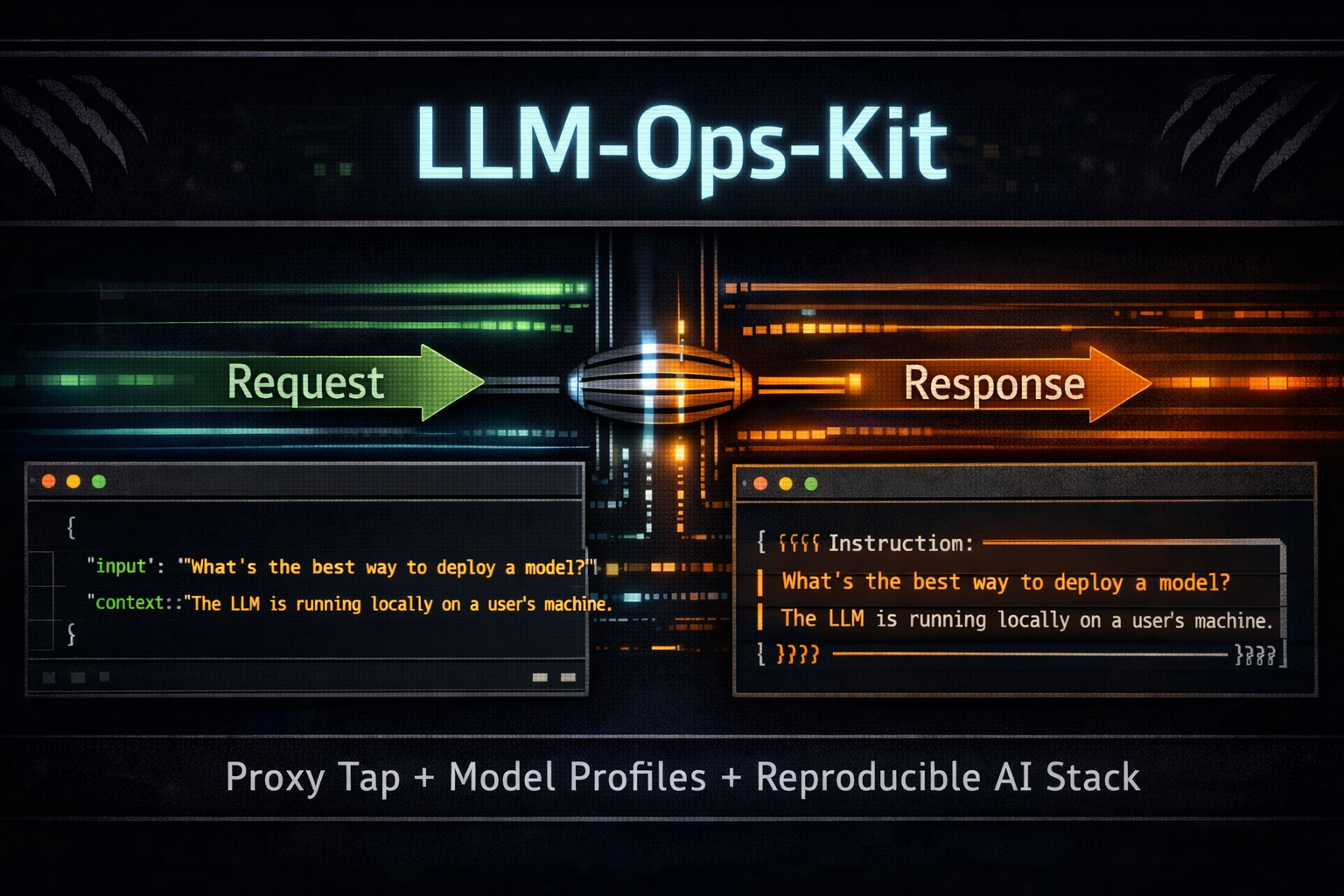
Self-hosting AI systems is no longer the hard part. Keeping them stable is.
That is the problem LLM-Ops-Kit is meant to solve.
Why I Built It
Once you move past single-command demos, local AI stacks get messy fast.
You end up with:
- one host doing inference
- another running a gateway
- local bridges translating one API into another
- model-specific startup flags
- runtime state that goes stale
- logs that grow forever
- shell wrappers that drift away from reality
That is manageable for a while, until you need to diagnose a failure under pressure. Then every undocumented path, hidden assumption, and stale PID file starts costing real time.
LLM-Ops-Kit grew out of exactly that problem.
What LLM-Ops-Kit Covers
The toolkit provides an operator layer for a self-hosted AI environment:
- unified wrappers for gateway, model servers, TTS, and bridges
- model profile management for chat, embeddings, and speech
- cross-host deployment helpers
- installed-runtime workflows that do not depend on a working source checkout
- observability tooling for prompt and request debugging
- runtime maintenance for logs and backups
- streamlined Jinja and ChatML template variants, including lower-context-friendly paths for smaller machines
In short, it turns a pile of scripts into something you can run, inspect, and repair without guessing.
Built From Real Failures
This project did not come out of a greenfield design exercise. It came out of chasing real operational problems:
- mismatched template selection
- stale runtime state after path migrations
- health checks that looked healthy while the service was actually broken
- TTS routing that appeared correct in config but failed in practice
- upstream API behavior that did not match what the bridge or caller expected
That last point was especially useful. End-to-end testing uncovered an OpenAI-compatible API mismatch in the MLX Audio path, which in turn exposed a real CustomVoice cloning issue. That led to a working local patch and an upstream PR.
That is the kind of work this toolkit is for. Not abstract architecture diagrams, operational reality.
A Big Part of the Payoff: Local TTS
One of the biggest immediate wins has been local TTS and voice cloning.
That matters for two reasons:
- spoken responses are a lot more engaging in day-to-day agent use
- premium hosted TTS gets expensive fast when you use it heavily
Getting MLX Audio working cleanly behind an OpenAI-compatible bridge meant the stack could keep the same higher-level interface while moving speech generation local. That is not just a technical nicety. It is a real cost reduction and a real improvement in control.
Why It Matters
There are plenty of tools for running models. There are far fewer tools for operating a whole self-hosted AI stack over time.
If you care about:
- reproducibility
- cross-host deployment
- local-first control
- debugging what your models and bridges are actually doing
- keeping prompt/template behavior under control instead of treating it like hidden magic
- reducing dependence on expensive hosted services
then the boring operational layer matters a lot.
That is where LLM-Ops-Kit lives.
Where It Goes Next
The immediate goal is a clean initial release with solid documentation and a stable runtime workflow.
After that, I expect the project to keep expanding in a few directions:
- tighter secrets integration
- better diagnostics and reporting
- cleaner runtime packaging
- more general support for non-OpenClaw stacks
- deeper tooling around local AI observability
- more refined prompt/template control for different model sizes and context budgets
Project Link
You can find the project here:
If you are building something similar, or if you are tired of debugging self-hosted AI infrastructure by memory and shell history alone, this project may save you some time.
Contribute
If you want to help improve the project, contributions are welcome.
That can mean:
- testing the toolkit in your own environment
- opening issues for real operational problems
- sending patches and documentation improvements
- sharing deployment notes from hardware and host setups different from mine
The project is being shaped by actual use, so practical feedback is especially valuable.
Support the Work
If this kind of tooling saves you time, reduces hosting costs, or helps you keep a self-hosted AI stack under control, you can also support the work directly:
Support This Work
If this project is useful and you want to help support more work like it, you can contribute here:
Join the Discussion
Comments for this post live in GitHub Discussions. That keeps moderation in one place and gives the conversation a stable home.